5 Steps to Bring Disability Awareness Into Your School (Easy Guide for Educators)

Practical steps to help educators introduce disability awareness, encourage respectful conversations, and help students better understand hidden disabilities.


Every student deserves to walk into a classroom and feel seen.

Not just noticed.
Seen.

For the student with a hidden disability, school can feel like a maze without a map.
It might be the child with ADHD who is trying to stay focused while the lights hum.
It might be the teenager with a chronic illness who is worried about having enough energy for lunch.

What you see might look like a lack of focus or a "bad attitude."
The reality is often a quiet struggle to navigate a world not designed for them.

As educators, you have the power to change that.
You can turn your school into a place of Freedom.
A place of Independence.

We want to help you make hidden disabilities visible through compassion and education.

Here are five practical steps to bring disability awareness into your school.


1. Start with Storytelling

Children and adults alike connect with stories much faster than they connect with statistics.

Facts give us information.

Stories give us empathy.

When we share stories about people living with hidden disabilities, we replace assumptions with understanding.

We move away from pity and toward empowerment.

You can start by introducing literature into your curriculum that features disabled characters.

Look for books that show disability as just one part of a person’s life.

Try This In Your Classroom

  • Read a story during morning meetings that features a service dog or a character with a non-visible condition.

  • Ask students to talk about what makes them unique.

  • Focus on how different “tools” (like glasses, hearing aids, or service dogs) help people do their best work.
Hardcover children's book Sugar's Sweet Alert: A Diabetes Alert Dog's Journey on a wooden desk

Resources like the Access Unleashed Tails series are designed specifically for this purpose.

They tell the stories of service dogs and their handlers in a hopeful, easy-to-understand way.

2. Redefine "Normal" Variability

We often talk about “normal” as if it is one specific way of being.

In reality, every human brain and body works differently.

When you normalize these differences, you take the “hidden” out of hidden disabilities.

It becomes okay to need something different to succeed.

Steps to Take

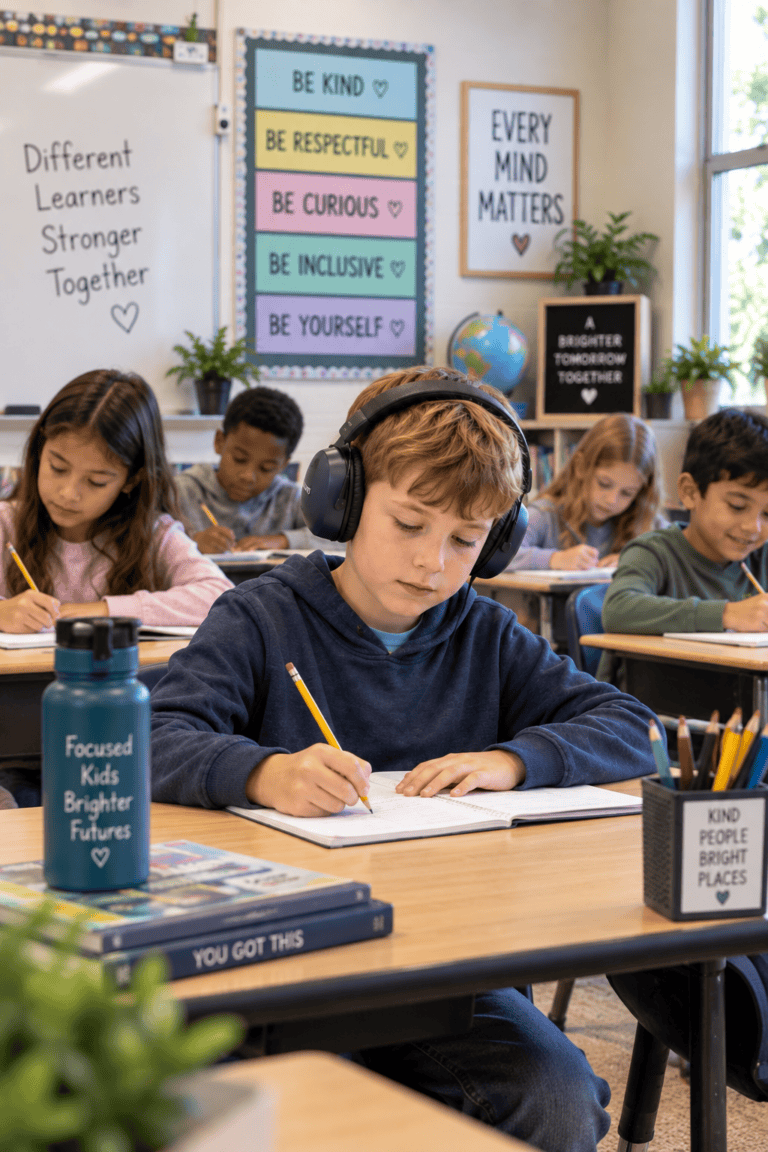
  • Normalize tools: Explain that some students need noise-canceling headphones to think, while others need a fidget tool to focus while listening.

  • Talk about energy: Teach students that everyone has different “battery levels” throughout the day.

  • Celebrate variability: Make it part of your regular language. “We all learn differently, and that is our strength.”

Action Tip: Use the phrase “fair doesn’t always mean equal.”

Fair means everyone gets what they need to succeed.

Classroom Kid wearing Headphones

3. Audit Your Physical and Sensory Environment

Sometimes the environment itself is the biggest barrier.

For a student with a sensory processing disorder or chronic pain, a traditional classroom can be overwhelming.

You don’t need a huge budget to make a big difference.

Small shifts create lasting change.

Consider these changes:

  • Lighting: If possible, use floor lamps or natural light instead of harsh overhead fluorescents.


  • Quiet Zones: Create a corner where students can go when they feel overstimulated.


  • Visual Cues: Use clear signs and schedules. This helps students with anxiety or cognitive differences feel safe and prepared.

Think of it as Visibility through design.

4. Train Your Staff (And Yourself)

Awareness starts at the top.

If the teachers and administrators don’t understand what a hidden disability is, the students won’t either.

Many educators want to help but simply haven’t been given the tools.

Professional development doesn’t have to be clinical or boring.

It should build a culture of inclusion.

We offer an Ambassador Program where volunteers educate schools about accessibility and hidden disabilities.

These workshops focus on:

  • Service dog etiquette (What to do when a dog is in the building).

  • Communication best practices.

  • Practical ways to support students with non-visible conditions.


Education reduces barriers.
When we know better, we do better.

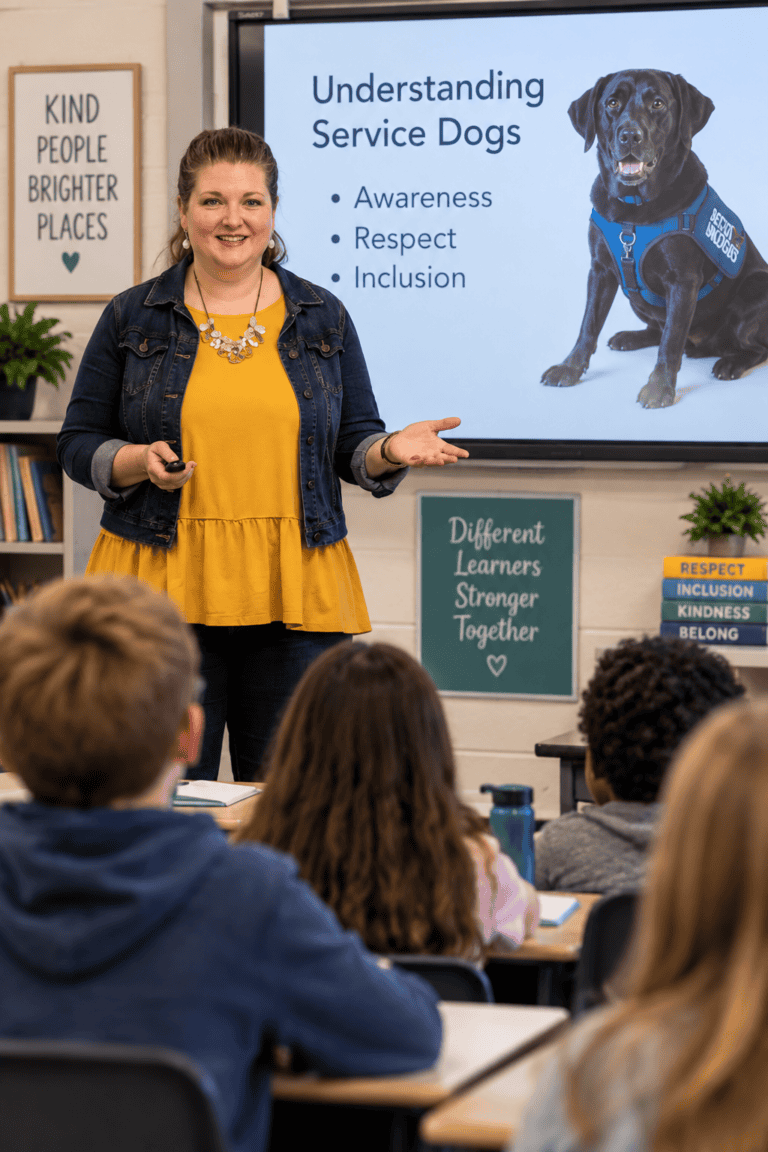
Teaching about Hidden Disabilities

5. Teach Service Dog Etiquette

Service dogs are becoming more common in schools.
They are not just pets.
They are medical equipment with four paws and a tail.

Teaching students how to interact (or not interact) with a service dog is vital to disability awareness.
It teaches respect for the handler’s Safety and Independence.

The Golden Rule of Service Dogs:
If the vest is on, the dog is on the clock.

What to teach your students:

  • Do not pet: Even if the dog is sitting still, they are working.


  • Do not talk to the dog: Distractions can prevent the dog from doing their job, like alerting to a seizure or low blood sugar.


  • Focus on the human: Always talk to the student, not the dog.

You can learn more about why service dogs matter and how they help people navigate the world with confidence.

A Future of Inclusion

Creating a school that values disability awareness isn’t a one-day event.
It is a choice we make every morning when the bell rings.

And it is the choice to believe that every student has something to offer.
It is the choice to make space for the things we cannot see.


When we educate our students and staff, we aren’t just helping those with disabilities.
We are building a kinder, more compassionate world for everyone.


Every child deserves to feel they belong.
Together, we can make that a reality.


Visibility leads to understanding.

Understanding leads to change.

Ready to take the next step?

We would love to help you bring these conversations to your school.

Whether you need educational resources or a guest speaker, we are here for you.

Schedule an educational presentation for your school today.

Learn more about our mission to unleash change.

Leave a Reply

Your email address will not be published. Required fields are marked *

Continue the Story

Follow the Journey

Stay connected to Barley’s story and what comes next.

Follow the Journey

Support a Journey

Be part of bringing independence home—one step at a time.

Suport the Journey

Make A Donation

Help turn stories like this into real, life-changing support.

Donate Now