
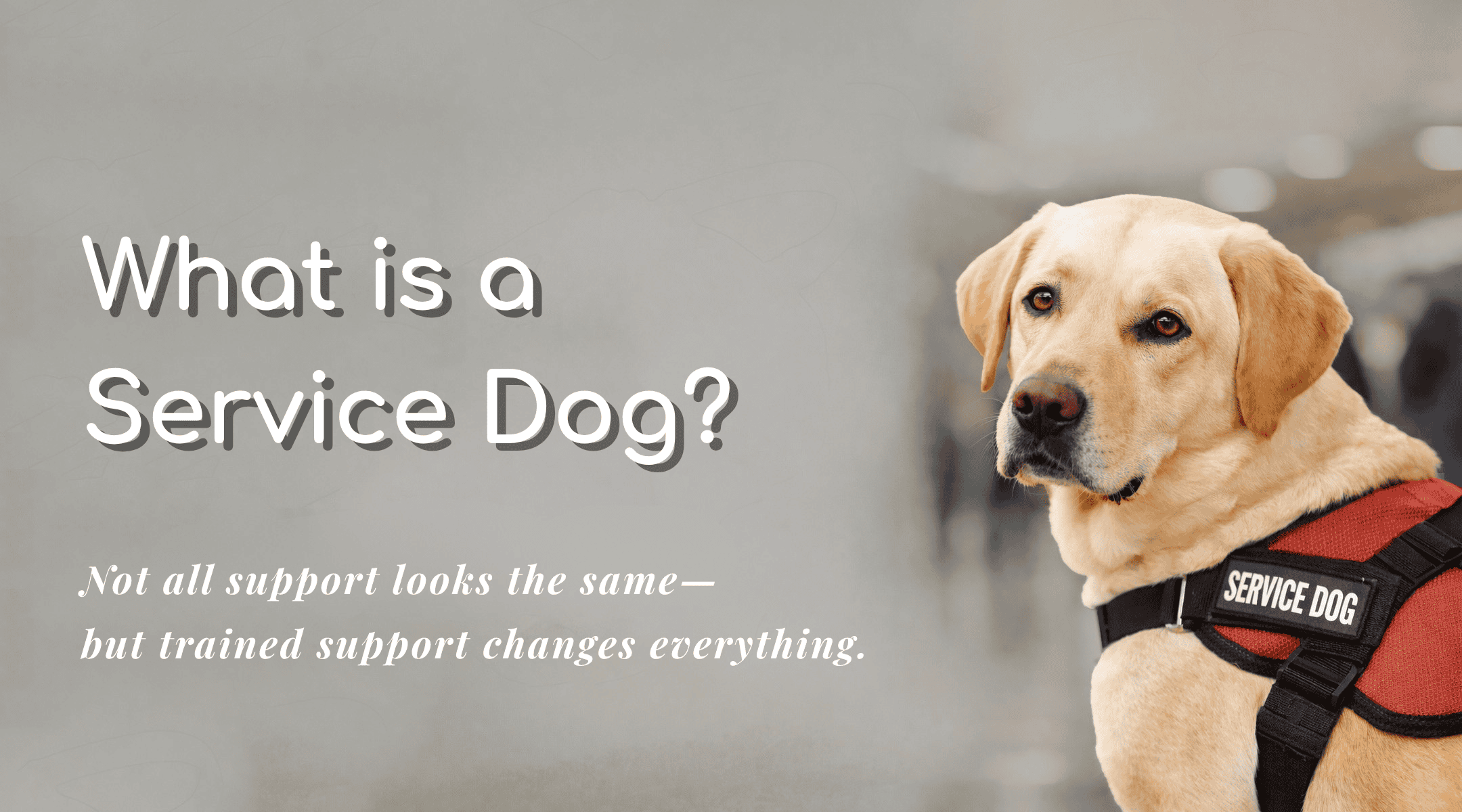
Labrador service dog wearing a harness with "Service Dog" label.

What is a Service Dog?

Not all support looks the same—but trained support changes everything.


Simple Definition

A service dog is a specially trained dog that performs specific tasks for a person with a disability.

These tasks are not general support or comfort.
They are trained, reliable actions that directly help someone navigate daily life more safely and independently.

Service dogs are recognized under the Americans with Disabilities Act (ADA) and are legally allowed to accompany their handler in public places.
What Qualifies as a Service Dog?

To be considered a service dog:

  • The handler must have a disability (visible or hidden)
  • The dog must be individually trained to perform specific tasks
  • Those tasks must directly relate to the person’s disability


This can include physical, medical, neurological, or psychiatric conditions.

Hidden disabilities—like PTSD, Celiac disease, autism, or chronic illness—are just as valid.

What a Service Dog Is NOT

This is where confusion happens. Not every support animal is a service dog.
Emotional Support Animals (ESAs):
  • Provide comfort through presence
  • Do NOT require specialized task training
  • Do NOT have public access rights

Therapy Dogs:
  • Support others (hospitals, schools, etc.)
  • Work in structured environments
  • Do NOT have individual public access rights

Service Dogs:
  • Trained for one person
  • Perform specific, necessary tasks
  • Protected under federal law

Why This Matters

When people misunderstand service dogs, it creates real barriers:

  • Access challenges in public spaces
  • Increased stress for handlers
  • Safety risks when dogs are distracted or questioned

Understanding what a service dog is—and isn’t—helps create a world that is safer, more respectful, and more accessible.

A Quiet Truth

Many people who need a service dog never pursue one.

Not because they don’t qualify.
But because the process feels overwhelming—financially, emotionally, and practically.

Over 60% of individuals who qualify for a service dog never take that step

That’s not a lack of need.
That’s a lack of access.

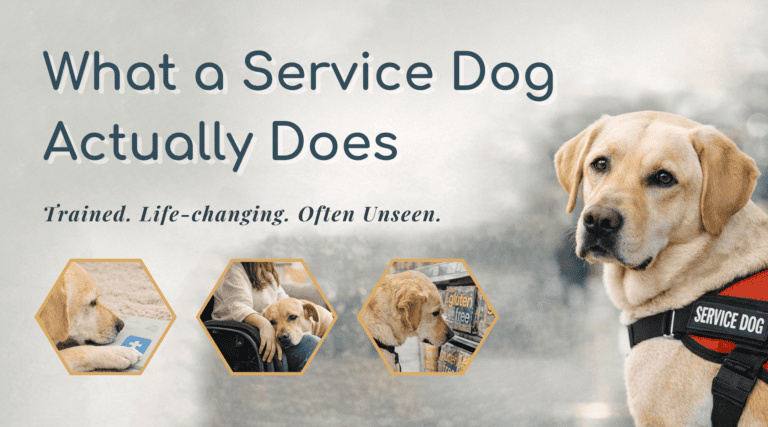
Service dog assisting a person with disabilities, wearing a harness.

Learn more

Learn More About What Service Dogs Actually Do

Because the most important work… often goes unseen.

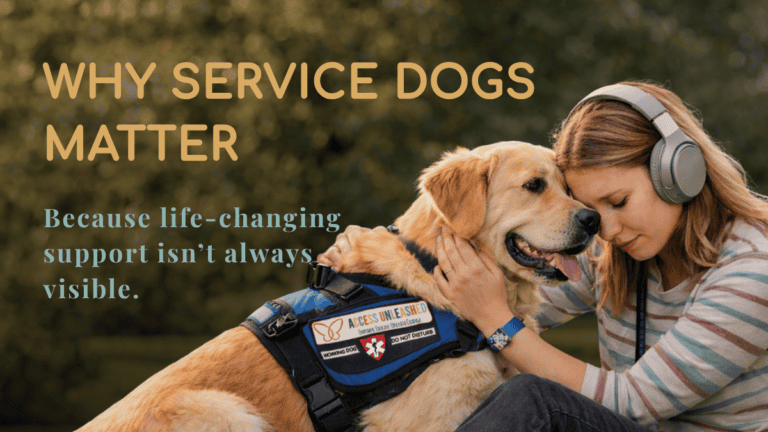
Woman with a service dog wearing a vest, showing emotional support.

Learn more

Understand
Why Service
Dogs Changes Lives

Because some of the most life-changing support… doesn’t look like expected.

One dog. One journey.
One movement toward
making the invisible visible.

Follow the Journey

Stay connected to Barley’s story and what comes next.

Follow the Journey

Support a Service Dog

Be part of bringing independence home—one step at a time.

Suport the Journey

Make A Donation

Help turn stories like this into real, life-changing support.

Donate Now