You may look fine.
You may sound fine.
You may even tell people, “I’m okay,” because explaining everything feels harder than carrying it alone.
But what you see isn’t always the reality.
The reality may include pain, fatigue, sensory overload, anxiety, medical risk, brain fog, or the constant work of planning around a condition other people can’t see.
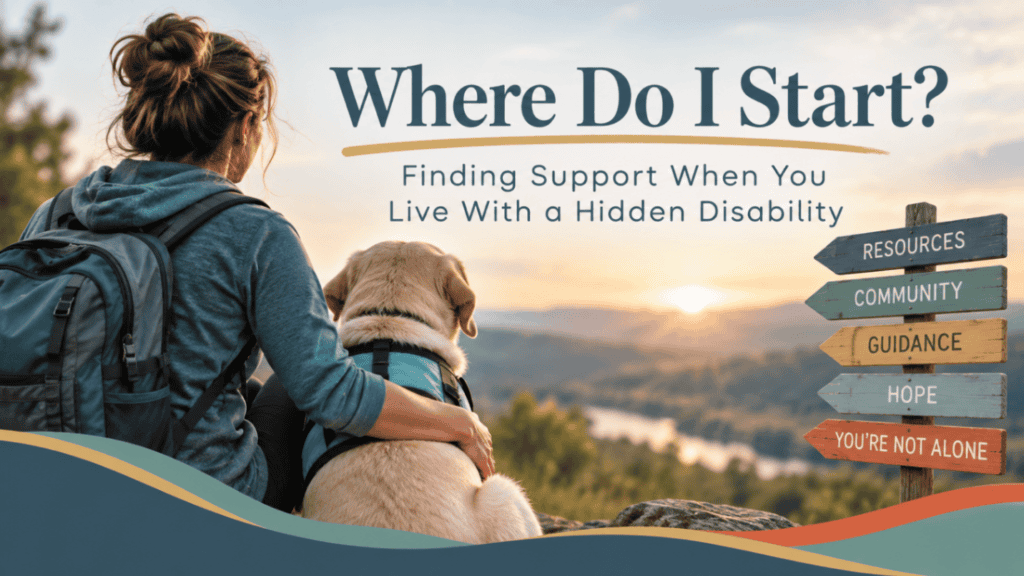
And when support feels hard to find, the first question is often simple:
Where do I start?
Start here.
You don’t need every answer today.
You need one next step, one trusted source, and one place that takes your experience seriously.
That’s enough for today.
A hidden disability is a condition that affects daily life but may not be immediately visible.
It can include chronic illness, mental health conditions, neurological differences, sensory impairments, autoimmune conditions, and more.
The name of the condition matters.
But so does the impact.
You may be trying to:
Try writing down three things:
You don’t need a perfect journal.
A few notes on your phone can be enough.
This list can help you notice patterns and explain your needs to a healthcare provider, school, workplace, caregiver, or trusted loved one.
For more information, read What Is A Hidden Disability?
You don’t have to prove your struggle to seek support.
Sometimes it’s easier to describe the barrier than the solution.
You may say:
Those statements are a beginning.
Now ask:
What change would make this safer, clearer, or more manageable?
That change might include:
These are examples, not promises.
Every person’s needs are different.
The goal isn’t to copy someone else’s support plan.
The goal is to identify what helps you participate with more confidence.
Support becomes easier to request when you can connect it to a real barrier.
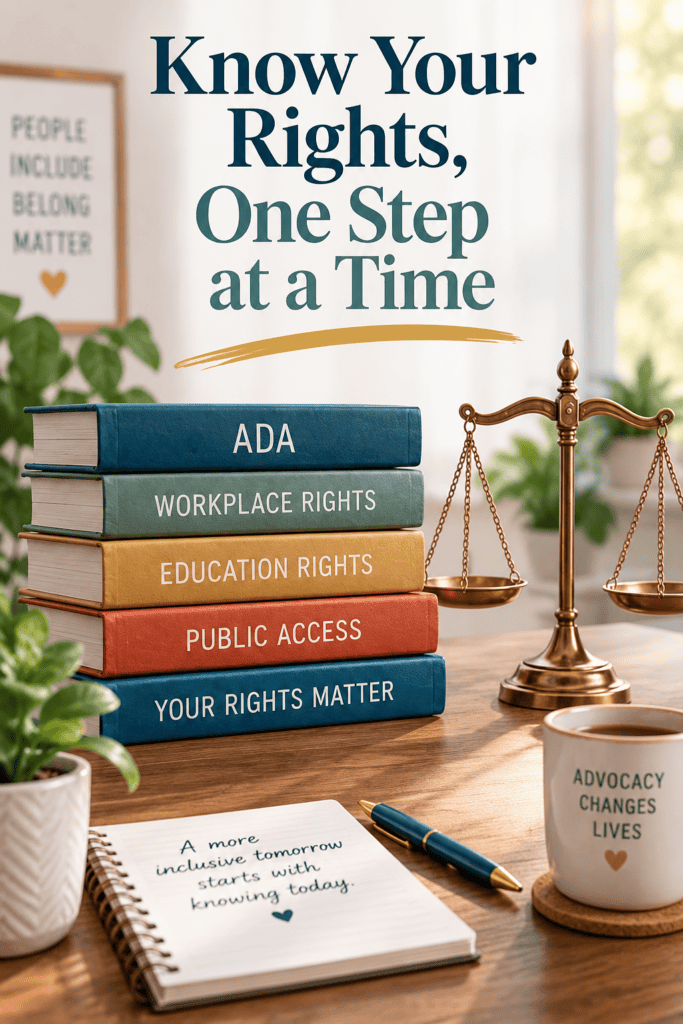
You don’t need to become a legal expert overnight.
You can begin by learning that disability protections may apply even when a condition isn’t visible.
In the United States, the Americans with Disabilities Act protects people with disabilities from discrimination in many areas of public life, including employment and public services.
Other laws and policies may apply in education, housing, healthcare, transportation, and local programs.
The details can depend on your situation.
So start with a trusted source.
You can also ask:
A healthcare provider may be able to describe how your condition affects daily activities.
A school disability services office may explain academic accommodations.
A human resources representative may explain workplace procedures.
A disability advocate may help you prepare for a difficult conversation.
You’re allowed to ask questions before you know exactly what you need.
You’re allowed to request a conversation.
You’re allowed to protect your privacy and share only what’s necessary.
This information is for general education, not legal advice.
Your disability doesn’t become less real because other people can’t see it.
The internet can offer answers.
It can also offer too many answers at once.
One list leads to another.
One form asks for more information.
One application requires energy you don’t have today.
That’s why your first resource doesn’t need to solve everything.
It only needs to help you take the next step.
The Access Unleashed Get Support page is designed as a starting point for individuals, caregivers, and support people.
You can share as much or as little as you’re comfortable sharing.
You can ask for guidance, resources, program information, or follow-up support.
You can also explore Start Here to choose a path that fits where you are right now.
You may be looking for:
Choose one.
Not ten.
The right resource is the one you can use, not the one that makes your list longest.
Support shouldn’t rest on one person.
It can grow in layers.
One person may help you understand medical information.
Another may listen without asking you to defend yourself.
Someone else may help with transportation, meals, appointments, school communication, or workplace conversations.
Your support system might include:
You don’t have to tell everyone everything.
You can give people a specific role.
Try saying:
Good support doesn’t take away your voice.
It helps you use it.
At Access Unleashed, our pathway is simple: learn, connect, and move forward.
You were never meant to navigate every barrier alone.
An accommodation is a change that helps remove a barrier created by a disability.
It isn’t special treatment.
It isn’t a reward.
It’s a practical way to create access.
You may explore accommodations at:
The best request is often clear and specific.
HERE ARE SOME EXAMPLES YOU CAN USE:

Instead of:
“I need things to be easier.”
Try:
“Written instructions would help me complete this task accurately.”
Instead of:
“I can’t handle this environment.”
Try:
“A quieter space would help me stay regulated and participate.”
Instead of:
“I may not be able to attend.”
Try:
“I’d like to ask whether remote participation is available if my symptoms increase.”
You can ask for access without apologizing for needing it.
You can also change your plan when your needs change.
That isn’t failure.
That’s self-awareness.
Access is not an indulgence. It’s a bridge to participation, safety, and Independence.
For some people, a service dog becomes part of a larger support system.
A service dog is trained to perform specific tasks that help with a person’s disability.
Those tasks may support medical, psychiatric, neurological, sensory, or mobility-related needs.
A dog may help with tasks such as:
A service dog isn’t the right choice for everyone.
It involves care, training, time, cost, responsibility, and public attention.
Start by focusing on tasks.
What does the dog need to do?
What barriers would those tasks reduce?
Can you care for a dog safely and consistently?
Would other accommodations help first?
Explore Paws with a Purpose: What It’s Really Like Working with a Service Dog to learn more about the everyday reality of working with a service dog.
For some, support looks like a service dog.
For others, it looks like a quiet room, a flexible schedule, a written plan, or a person who believes them.
There is no single right path.
The right support is the support that helps you live with greater Freedom, Safety, and Independence.

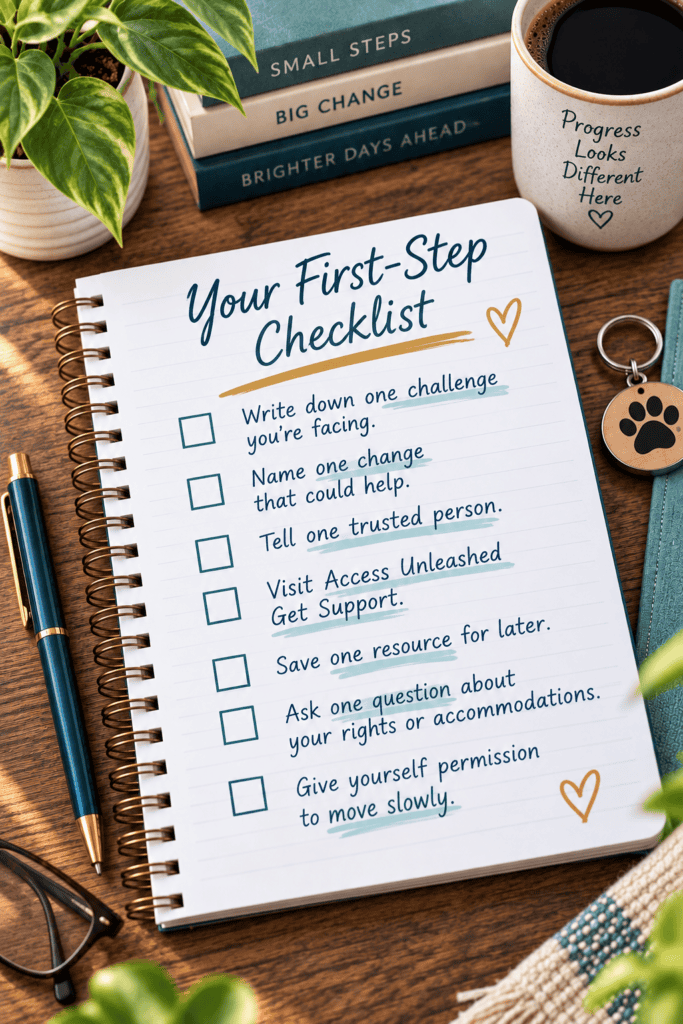
If everything feels like too much, begin with this:
That’s a real start.
You don’t need every answer.
You don’t need a perfect plan.
You don’t need to explain your entire life in one conversation.
You need somewhere safe to begin.
The struggle may be hidden.
The support shouldn’t be.
At Access Unleashed, we believe people with hidden disabilities deserve to feel seen, heard, and supported.
Not judged.
Not questioned.
Not left alone with a maze of information.
You can start your journey when you’re ready.
You can ask for help.
You can share your story.
You can take the next step, even if it’s small.
Visibility creates understanding.
Understanding creates access.
Access creates possibility.
And wherever you are beginning, there is still hope for the road ahead.